

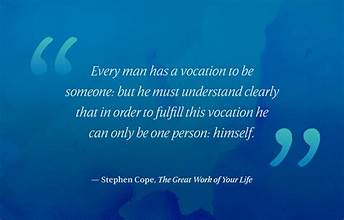
Stephen Cope’s book draws wisdom from the Bhagavad Gita and applies it to modern life, particularly in finding and living one’s dharma—one’s true calling. If we apply Cope’s insights to corporate leadership today, the message is profound: great leadership is not about mere success but about aligning one’s work with a deeper sense of purpose.
Leadership as Dharma
Stephen Cope’s The Great Work of Your Life explores a timeless question: How do we find and fulfill our life’s purpose? Drawing on the Bhagavad Gita, Cope argues that each of us has a unique dharma—a calling that aligns with our deepest strengths, values, and passions.
This philosophy has profound implications for today’s corporate world, where leaders are often caught between external pressures—profits, competition, market expectations—and an internal longing for meaning and fulfillment. The leaders who thrive today are those who understand that leadership itself is a dharma—a sacred responsibility, not just a job.
1. Finding and Owning Your Leadership Dharma
In the Bhagavad Gita, Krishna tells Arjuna: “It is better to fail in your own dharma than to succeed in the dharma of another.” Many leaders struggle because they are pursuing roles or ambitions that are not truly theirs. They climb the corporate ladder only to realize they are in the wrong place.
Cope’s wisdom suggests that leaders must ask:
•Am I leading in a way that aligns with my deepest strengths and values?
•Am I pursuing success on my terms, or am I trapped in someone else’s definition of it?
•What unique contribution am I meant to make in the world of leadership?
In today’s business world, the most impactful leaders don’t try to imitate others. Instead, they lead from their authentic strengths. True leadership begins when leaders embrace their own dharma rather than chase external validation.
2. Renouncing the Fruits of Action: Leading Without Ego
One of the most radical teachings of the Bhagavad Gita is the idea of renouncing the fruits of action—acting with full effort but without attachment to outcomes. Cope highlights this as a key principle for fulfillment.
For leaders, this is a transformative lesson. Many executives are driven by external rewards—bonuses, promotions, prestige. But attachment to these things creates fear, stress, and poor decision-making. Instead, leaders who focus on service, excellence, and contribution—rather than just results—create lasting impact.
This applies directly to modern corporate leadership:
•Lead for the mission, not the recognition.
•Make decisions based on principles, not fear of failure.
•Measure success not just by external rewards, but by long-term impact.
When leaders detach from ego-driven motivations, they become freer, more creative, and more effective.
3. Taking the Leap: The Power of Courage in Leadership
One of the most moving aspects of Cope’s book is his focus on courage—the willingness to step into uncertainty and follow one’s calling despite fear. Many leaders today operate from a place of scarcity, worrying about job security, market trends, or competition. But true leadership demands a leap of faith.
Leaders must ask themselves:
•Am I leading boldly, or am I playing it safe?
•Am I making decisions based on fear or vision?
•What would I do if I trusted myself completely?
Cope tells the stories of artists, activists, and thinkers who had to step into the unknown to fulfill their purpose. In today’s business world, the same holds true: the most visionary leaders are those who take bold risks, challenge outdated models, and innovate in ways others fear to.
4. Sacred Duty: Leadership as Service
The Bhagavad Gita teaches that dharma is not about personal ambition—it is about service. Leadership, when seen as dharma, is not about power or control but about stewardship and responsibility.
The best leaders today understand this deeply. They:
•Prioritize people over profits. Companies with people-first cultures consistently outperform those that treat employees as expendable.
•Create a culture of trust. Psychological safety fuels innovation, engagement, and long-term success.
•Use power responsibly. Leadership is not about personal gain; it is about creating a lasting positive impact.
When leaders view their role as a sacred duty rather than a personal achievement, they transform their organizations and leave behind a legacy.
5. The Role of Surrender: Trusting the Process
One of the most paradoxical lessons in The Great Work of Your Life is the idea of surrender—letting go of the illusion of control and trusting the unfolding of one’s dharma.
For leaders, this is a difficult but essential lesson. In a world obsessed with control—data, analytics, KPIs—true leadership sometimes requires trusting intuition, allowing space for creativity, and knowing when to let go.
This applies in corporate leadership today:
•Not every decision can be made by logic alone—sometimes, wisdom and intuition are required.
•Not every failure is a mistake—some are necessary for growth.
•Not every path is linear—sometimes, the greatest leadership lessons come from detours.
Leaders who embrace surrender don’t become passive—they become adaptable. They learn to ride the waves of change rather than resist them.
6. Leadership as Legacy: What Will You Leave Behind?
At the heart of Cope’s message is this: The greatest fulfillment in life comes not from personal achievement, but from living one’s dharma fully and leaving behind something greater than oneself.
This is the ultimate question for leaders:
•What is the real impact of my leadership?
•Am I building something that will last beyond my tenure?
•How am I empowering others to step into their own dharma?
The best leaders do not just focus on short-term wins. They develop people, shape cultures, and create systems that continue to thrive long after they are gone.
Leadership as a Spiritual Practice
Stephen Cope’s The Great Work of Your Life is not just about personal fulfillment—it is about how each of us can contribute to something larger than ourselves. When applied to corporate leadership, it offers a profound redefinition of success:
•Success is not about external rewards—it is about fulfilling one’s unique purpose.
•Leadership is not about control—it is about service.
•The best leaders are not those who seek power, but those who inspire others to step into their own greatness.
In a world where corporate leaders are often measured by stock prices and performance metrics, Cope’s wisdom offers a radical shift: leadership is ultimately about living one’s dharma in a way that uplifts others. Those who embrace this truth will not only build successful companies—they will leave behind a legacy that matters.
This blog utilizes ChatGPT, an AI language model created by OpenAI, to assist in generating and refining content. While the AI helps with drafting and ideas, all content is carefully reviewed, edited, and finalized by Compass Anchor Coaching to ensure accuracy, clarity, and alignment with our voice and values. We believe in transparency and are committed to delivering high-quality, thoughtful content.